Why Physio and Chiro Patients Stop Coming, and the Messages That Help
Every physiotherapist and chiropractor knows the pattern. A patient comes in, the assessment goes well, you agree a plan, and after two or three visits they quietly stop booking. Their recovery stalls, and a gap appears in your diary where the rest of the plan should have been.
Industry estimates of how many patients finish their full plan of care vary widely. But the reasons patients give for stopping are well documented, and most of them can be addressed with the right message at the right moment.
What research says about why patients stop
In 2025, researchers in the US interviewed patients who had a physiotherapy evaluation for a musculoskeletal problem and then did not come back (Thomas and colleagues, Musculoskeletal Science and Practice). It is a small qualitative study, so it tells us why rather than how often, but the reasons are telling:
- Access problems. The most common primary reason, led by cost and then by clashes with work schedules.
- They felt better. Several patients stopped because they had improved enough.
- They thought they could carry on alone. Some believed they could continue their exercises without coming in, or felt the visits were not adding value.
- Communication with the therapist. A few had a negative experience or felt the communication was poor.
- Other medical treatment took priority.
A separate 2022 study of five rehabilitation clinics (PLOS ONE) found that 13.2% of patients in exercise-based therapy for low back pain stopped early because they had improved, without a formal discharge.
None of these reasons is “they did not want to get better”. Patients stop because coming in is hard, because they feel better, or because nobody showed them why the next visit matters.
Match each reason to a moment and a message
The fix is not one magic reminder. It is a small set of messages at the moments where people tend to drift.
1. Before they leave the first visit: book the next one
The easiest drop-off to prevent is the one that happens at the front desk. Patients who leave without their next visit booked are much more likely to drift. Book it before they go, then confirm it by message so it lives in their phone, not just your diary:
Thanks for coming in today, Daniel. Your next session is booked for Wednesday at 6 PM. You can change it anytime by replying here.
2. Right after the assessment: make the plan visible
Mismatched expectations are a common reason people disengage. A short summary of the plan, in plain words, sets the expectation that recovery takes several visits:
Great to meet you today, Meera. As we discussed, we suggest 6 sessions over 4 weeks to settle your shoulder and get you back to swimming. Your next one is on Thursday.
3. Before every visit: a reminder they can act on
Reminders with Confirm and Reschedule buttons protect the visits that are already booked. Reviews of text-message reminders in healthcare have found they increase attendance, and a quick reschedule is far better than a silent no-show.
4. When they say “I feel better”: explain the finish line
“Feeling better” is good news, and also one of the main reasons people stop early. Celebrate it, and explain kindly why the remaining sessions matter:
That is great progress, Arjun! The last two sessions are about making sure it stays that way when you are back to running. Shall we keep Friday?
Never pressure. If they decide to stop, leave the door open.
5. When cost or time gets in the way: remove the barrier
Cost and schedule clashes were the leading access problems in the study. Offer what actually helps:
- Packs of sessions paid upfront, so each visit does not feel like a new cost.
- Early morning, evening or weekend times for people who work office hours.
- Online follow-ups where appropriate.
Hi Priya, if evenings are easier, we now have 7 PM sessions on Tuesdays and Thursdays. Want me to move your next one?
6. When they miss a visit: check in the next day
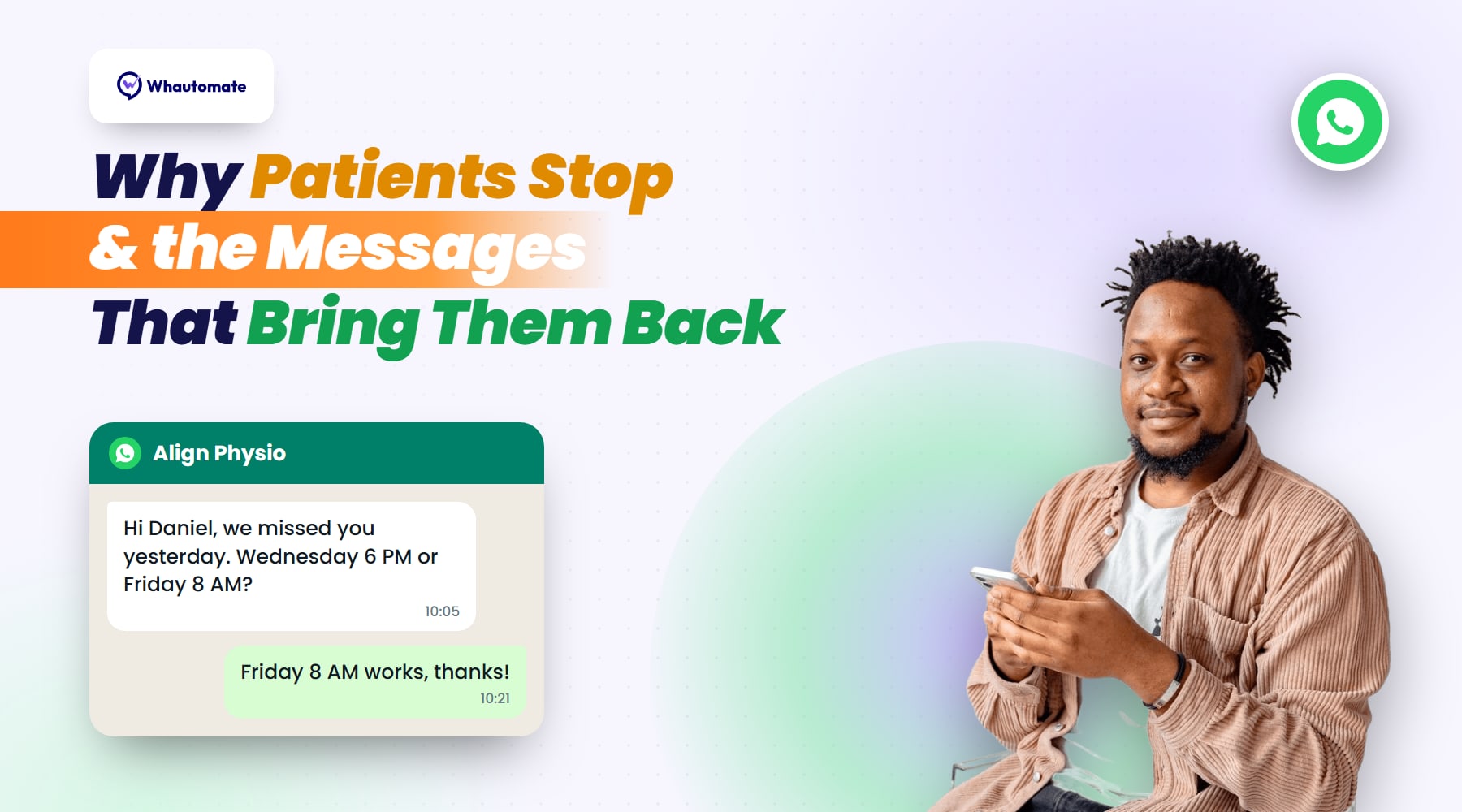
A missed visit is the clearest early warning. A warm check-in the next day, with two times to choose from, catches many patients before they drift away for good. Our reactivation message templates include wording for missed visits, finished plans and patients who stopped months ago.
7. When the plan ends: a review, not a goodbye
For chiropractors with maintenance schedules and physios who recommend a review, the end of the acute plan is a natural moment to book the next visit. For patients who finished because they reached their goals, a friendly check-in a few weeks later is enough. Do not send them win-back messages.
Measure it
You cannot fix what you do not measure. A simple monthly figure per therapist works well: visits attended divided by visits planned. If one therapist’s patients drop off more, it is usually about communication and planning, not clinical skill, and the messages above are a good place to start.
How Whautomate keeps patients on their plan
Whautomate helps physio and chiro practices send the right message at each moment without adding admin:
- Booking inside WhatsApp and on your online booking page, so the next visit is easy to book from anywhere.
- Appointment reminders with confirm and reschedule buttons before every session.
- Recall reminders that follow up patients whose next visit is due, and stop as soon as they book.
- Session packs and plans with credits tracked per patient.
- One shared inbox for WhatsApp, Instagram, Messenger and website chat, with saved replies for the messages above.
See how it works for physiotherapists and chiropractors.
Frequently asked questions
Why do patients stop going to physiotherapy?
Research interviews with patients point to access problems (mainly cost and work schedules), feeling better, believing they can continue alone, poor communication with the therapist, and other medical treatment taking priority.
How can I improve plan-of-care completion?
Book the next visit before the patient leaves, explain the plan in plain words, send reminders with easy reschedule options, follow up missed visits the next day, and remove cost and time barriers with packs and flexible hours.
What should I say to a patient who feels better and wants to stop?
Celebrate the progress, then briefly explain what the remaining sessions are for, such as making sure the improvement lasts when they return to sport or work. If they still want to stop, respect it and leave the door open.
How do I measure patient drop-off?
Track visits attended divided by visits planned, per therapist, each month. Also look at how many patients leave without their next visit booked.
Should I send win-back messages to every past patient?
No. Leave out patients who finished their plan and reached their goals. Send win-back messages to people who stopped part-way through or who are due a review, and always include an easy way to say no.