Stop Paying Per Enquiry: Build Your Own Patient Booking Channel
For many practices in India, new patients arrive through someone else’s app. A listing platform, a lead marketplace or an ad sends the enquiry, and the practice pays: per enquiry, per call, per booking, or for a premium spot. Some of that is worth it. But when every new patient comes through a channel you rent, your growth depends on someone else’s prices and rules.
The alternative is not to give up on those channels overnight. It is to build a channel you own, so that more of your patients find you, contact you and book with you directly, and so that every repeat visit stays with you.
Rented channels vs owned channels
Rented channels are anything where you pay for each lead or for visibility: listing apps, lead platforms and paid ads. They can bring new patients quickly, but:
- The cost repeats for every enquiry, including people who never book.
- The patient relationship often sits inside the platform’s app.
- Prices, ranking and rules can change without notice.
Doctors have raised this publicly. In 2024, Medical Dialogues reported a urologist’s complaint that he was being charged for patient enquiry calls routed through a listing platform.
Owned channels are the ones you control and do not pay per enquiry for:
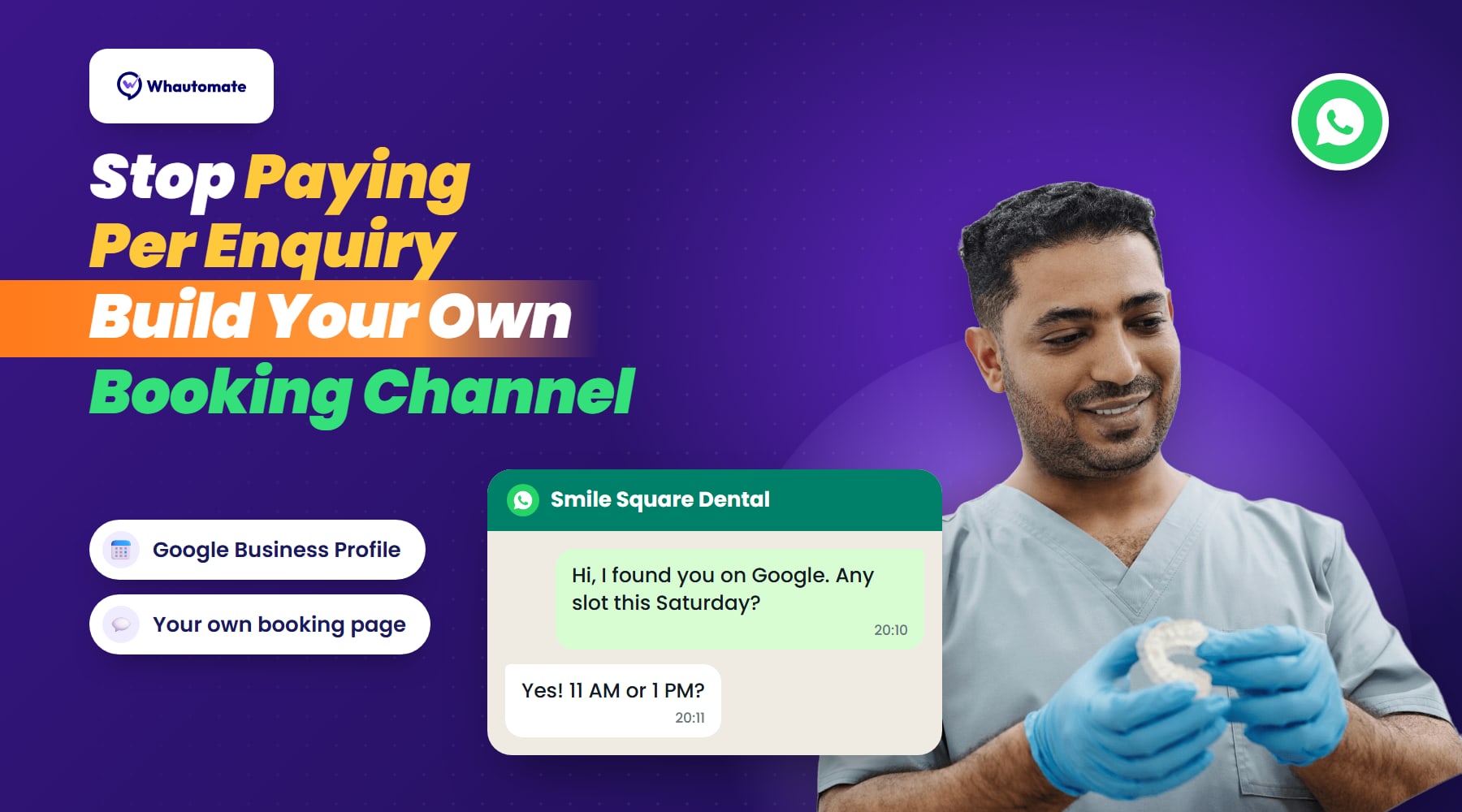
- Your Google Business Profile
- Your own booking page or website
- Your WhatsApp number and inbox
- Your list of existing patients
Owned channels take a little setup, but every patient who finds you there costs you nothing extra, and every repeat visit stays yours.
Why WhatsApp is the heart of an owned channel in India
Most patients in India would rather message than call. A Kantar survey commissioned by Meta found that 86% of online adults in India message a business at least once a week, and that more than 70% prefer messaging to calls or email. Patients already message practices on WhatsApp, often on a staff member’s personal phone.
Turning that habit into a proper channel, with one shared inbox, quick replies, booking inside the chat and automatic reminders, is the single biggest step to owning your patient flow.
Step 1: Make your Google Business Profile a front door
When someone searches “dentist near me” or “physiotherapist in Anna Nagar”, your Google Business Profile is often the first thing they see. Make it work:
- Accurate details: name, address, phone, hours and services, the same everywhere you appear online.
- A WhatsApp chat button: Google now lets verified profiles add a WhatsApp Chat option. See our guide on how to add WhatsApp to your Google Business Profile.
- A booking link: add your online booking page so people can book without calling.
- Reviews: ask happy patients for a review. A Google review QR code at reception makes it easy.
Step 2: Give patients a booking page you own
A booking page shows your services, your doctors or therapists and their free times, so patients can book at 10 PM instead of calling at 10 AM. Link it from your Google profile, Instagram bio, website and WhatsApp replies. It works around the clock and never charges you per booking.
Step 3: Answer every message fast, with a time
Patients often contact more than one practice. The first reply that offers a specific time usually gets the booking. Two habits make the difference:
- Reply to “how much is a consultation?” with the fee and two times, not just the fee. Our enquiry reply templates show how.
- Set an away message for when you are with patients or closed, with your hours and booking link.
Step 4: Keep every repeat visit on your own channel
Even if a new patient first came through a listing app, their follow-ups, reviews and next check-up can come straight to you:
- Book the next visit before the patient leaves, and confirm it on WhatsApp.
- Send reminders before every appointment, with confirm and reschedule buttons.
- Remind patients when their next check-up or review is due.
This is where owned channels pay off most. A patient you never pay for again, who comes back every six months, is worth far more than one new enquiry.
A note on professional rules
Medical and dental councils in India have rules on advertising and self-promotion by practitioners. The steps above are about making accurate information easy to find and making booking easy, not about advertising, but check your council’s current code of conduct before you publish anything promotional.
How Whautomate helps you own your patient flow
Whautomate gives Indian practices the owned channel in one place:
- One shared inbox for WhatsApp, Instagram, Messenger and your website chat. See the team inbox.
- An online booking page and booking inside WhatsApp, with your services, team and real availability. See appointment scheduling.
- Reminders with confirm and reschedule buttons, and recall reminders when check-ups are due.
- Payment links by WhatsApp, with Indian payment gateways such as Razorpay.
You keep using any listing you still find useful. The difference is that every patient who reaches you, from anywhere, ends up in a channel you own. See how it works for dentists and physiotherapists.
Frequently asked questions
Should I stop using listing apps completely?
Not necessarily. Many practices keep a listing for discovery while building their own channel, then compare where booked patients actually come from. Over time, more patients find and rebook with you directly.
How do patients find my own booking page?
Through your Google Business Profile, Instagram bio, website, WhatsApp replies and the reminders you send existing patients. Each place links to the same page.
Is WhatsApp allowed for communicating with patients in India?
India’s 2020 Telemedicine Practice Guidelines for registered medical practitioners list messaging platforms such as WhatsApp among the tools that can be used, with conditions such as showing your registration number and keeping records. Use it for booking, reminders and practical questions, and follow your council’s guidance for consultations.
How much does an owned channel cost?
There is no fee per enquiry. You pay for the tools you use (for example a booking and messaging platform) and for WhatsApp’s own message charges where they apply, which are low for replies to patients who message you first.
What about patient privacy?
Collect only what you need, tell patients how you use their details, and get consent for reminders and updates. India’s Digital Personal Data Protection Act and its 2025 Rules set out these duties, with most obligations coming into force in 2027.