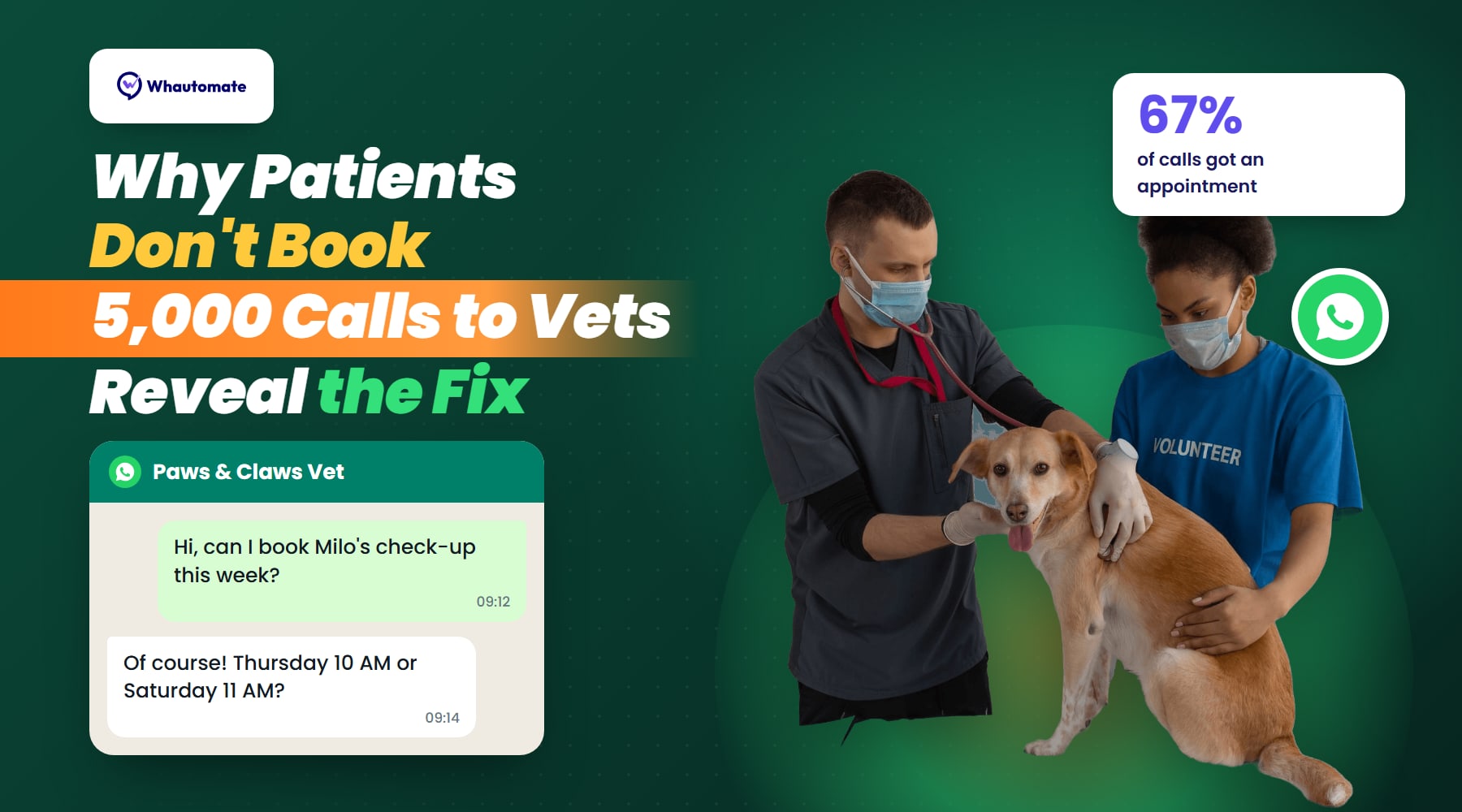
Why Patients Don't Book: What 5,000 Calls to Vets Reveal
Every practice owner worries about filling the diary. Most of the effort goes into getting found: Google, Instagram, referrals, a better website. But a large study of veterinary practices suggests many practices lose new clients at a much simpler point: the moment someone tries to get in touch.
The study: 5,000 calls, one in three without an appointment
In early 2025, a research team led by Simon Haeder at Ohio State University’s College of Public Health posed as dog owners and called more than 5,000 randomly selected veterinary practices in California, Minnesota, Ohio, Pennsylvania, Texas and Washington. They asked for a routine appointment, the kind of visit every practice wants. The results were published in the Journal of the American Veterinary Medical Association, and Ohio State’s summary is worth reading in full.
- The callers secured an appointment 67% of the time. One call in three ended without one.
- At rural practices, they got an appointment less than 62% of the time.
- When they did book, the average wait was 6.4 days (8.6 days in rural areas).
The surprising part is why calls failed. According to the researchers, failed calls were typically because the callers could not connect with staff, or were on hold for more than five minutes, the cut-off the study used. Only in almost 4% of cases did the practice not have capacity for a new patient.
In other words, most of the lost appointments were not lost because the diary was full. They were lost because nobody could pick up the phone.
It is not just vets
Other studies of private practices found the same pattern:
- When researchers emailed 725 therapists in Chicago asking for an appointment, 21.7% never replied, and fewer than half responded in a way the study rated as highly responsive (Journal of Counseling Psychology, 2022).
- In an earlier study of therapists in New York, callers who left voicemails got a reply only about half the time (Kugelmass, 2016).
- An older UK trade test of dental practices found 44% of test calls failed to reach a person.
The details differ, but the lesson is the same. Demand is not the problem. Reaching the practice is.
Why small practices miss so many enquiries
Nobody at a practice ignores calls on purpose. Missed calls are almost always about structure:
- The front desk does three jobs at once. Checking people in, taking payments and answering the phone all happen at the same time, and the phone loses.
- Calls bunch up at peak times. Mornings, lunch and the end of the day are when owners call, and when the team is busiest.
- Clinicians cannot answer mid-appointment. In small practices, the vet, physio or therapist is the receptionist for much of the day.
- Many enquiries arrive after hours. People research and get in touch in the evening, when nobody is there.
And when someone cannot get through, they rarely wait. They try the next practice on the list.
Five fixes that do not need a new phone system
You do not have to buy an AI phone agent or hire another receptionist to recover most of these enquiries. Start here.
1. Find your peak hour
Pull a week of call data and look at when calls go unanswered, not just how many. A practice that answers most calls across the day can still miss a large share over lunch or first thing in the morning. Fix the worst hour first: move a break, add cover, or call back within the hour.
2. Give people a second door
The phone is not the only way people want to reach you. In many markets most people prefer messaging: surveys commissioned by Meta found 86% of online adults in India and about 80% of Malaysians message a business at least weekly. A WhatsApp number, Instagram DMs and a chat box on your website let people get in touch without waiting on hold, and your team can answer between appointments instead of interrupting them.
Put that second door everywhere people find you: your website, your Instagram profile and your Google Business Profile.
3. Answer with a time, not just an answer
When someone asks “do you have anything this week?”, the reply that books is “Thursday 10 AM or Saturday 11 AM?”, not “yes, we do”. Our enquiry reply templates show how to answer price questions and “can you see my pet for…” in a way that ends with a booking.
4. Reply automatically when you cannot
An automatic reply during consultations and after hours tells people their message arrived, when you will reply, and how to book now. For vet practices, it should also give the details of your emergency clinic, so a worried owner never waits on an unanswered message. Our away message templates include wording for vets, dentists and other practices.
5. Let people book themselves
A booking link means nobody has to reach you at all to book a routine appointment. Many people would rather pick a time at 9 PM than call at 9 AM. Follow every booking with a reminder they can confirm or reschedule with one tap, so the appointment you won is also kept.
How Whautomate helps
Whautomate gives practices that second door, and makes sure every message gets an answer:
- One shared inbox for WhatsApp, Instagram, Messenger, website chat and SMS, so any free team member can reply between appointments. See the team inbox.
- Away messages by your opening hours, with your emergency clinic details, on every channel.
- Booking inside WhatsApp and on your online booking page, plus appointment reminders with confirm and reschedule buttons.
- Vaccine and check-up reminders that follow up owners when their pet is due.
For vet practices specifically, see Whautomate for vets.
The takeaway
The Ohio State study shows that most practices do not lose clients because their diary is full. They lose them because people cannot get through. Measure when you miss calls, open a second door through messaging, reply with a time, answer automatically when you cannot, and let people book themselves. None of it needs a bigger team. It needs fewer ways for a ready-to-book client to slip away.
Frequently asked questions
What did the Ohio State vet study find?
Researchers posing as dog owners called more than 5,000 vet practices in six US states in early 2025. They got an appointment 67% of the time (less than 62% at rural practices). Most failures were because they could not reach staff or were on hold for more than five minutes; only almost 4% were because the practice had no capacity.
How many calls do practices miss?
There is no reliable independent average, and vendor figures vary widely. The best evidence comes from mystery-shopper studies like the one above, which show a large share of first contacts never reach a person or get a reply.
Will patients really message instead of calling?
In many markets, yes. Surveys commissioned by Meta found most online adults in India and Malaysia message a business every week. In the US, many people still prefer to call, so offer both: phone for those who want it, messaging and online booking for everyone else.
Do I need an AI receptionist to fix missed calls?
Not to start with. Fixing your peak hour, adding messaging and online booking, and setting up automatic replies recover a large share of lost enquiries for a fraction of the cost. Consider phone automation only if a gap remains.